
Why Does My Child Keep Getting Cavities?
You're doing everything right. You remind your child to brush every morning and every night, you've bought the fun toothbrush, and you've even tried the timer. Then you come in for a checkup and hear the words no parent wants to hear: "We found another cavity." It's frustrating, and it's easy to wonder what you're missing.
We hear this from parents all the time at Little Sprouts Pediatric Dentistry, and we want you to know it's far more common than you might think. Cavities in kids can develop even when a child brushes every single day. The good news is that there are usually a few specific, fixable reasons behind it.
In this post, Dr. Jonathan McNair and our team walk through the most common causes of childhood cavities, from missed surfaces between the teeth to snack choices and brushing technique. We also cover what we recommend for kids who seem to get a new cavity at every visit. If you're a parent in Sun City, TX, or the surrounding area, we hope this gives you a clear plan for protecting your child's smile.
Brushing Alone Isn't Enough: The Five Surfaces of a Tooth
One of the most common things we notice in children who keep developing cavities is that the brushing is actually going well. Parents are doing their part, and kids are putting in the effort. What's often missing is flossing.
Here's why it matters. Every tooth has five surfaces. When your child brushes, the toothbrush reaches three of them: the chewing surface, the outer surface facing the cheek or lips, and the inner surface facing the tongue. That leaves two surfaces untouched, and those are the sides where one tooth meets the next. No matter how carefully your child brushes, a toothbrush simply can't clean between teeth that are touching.
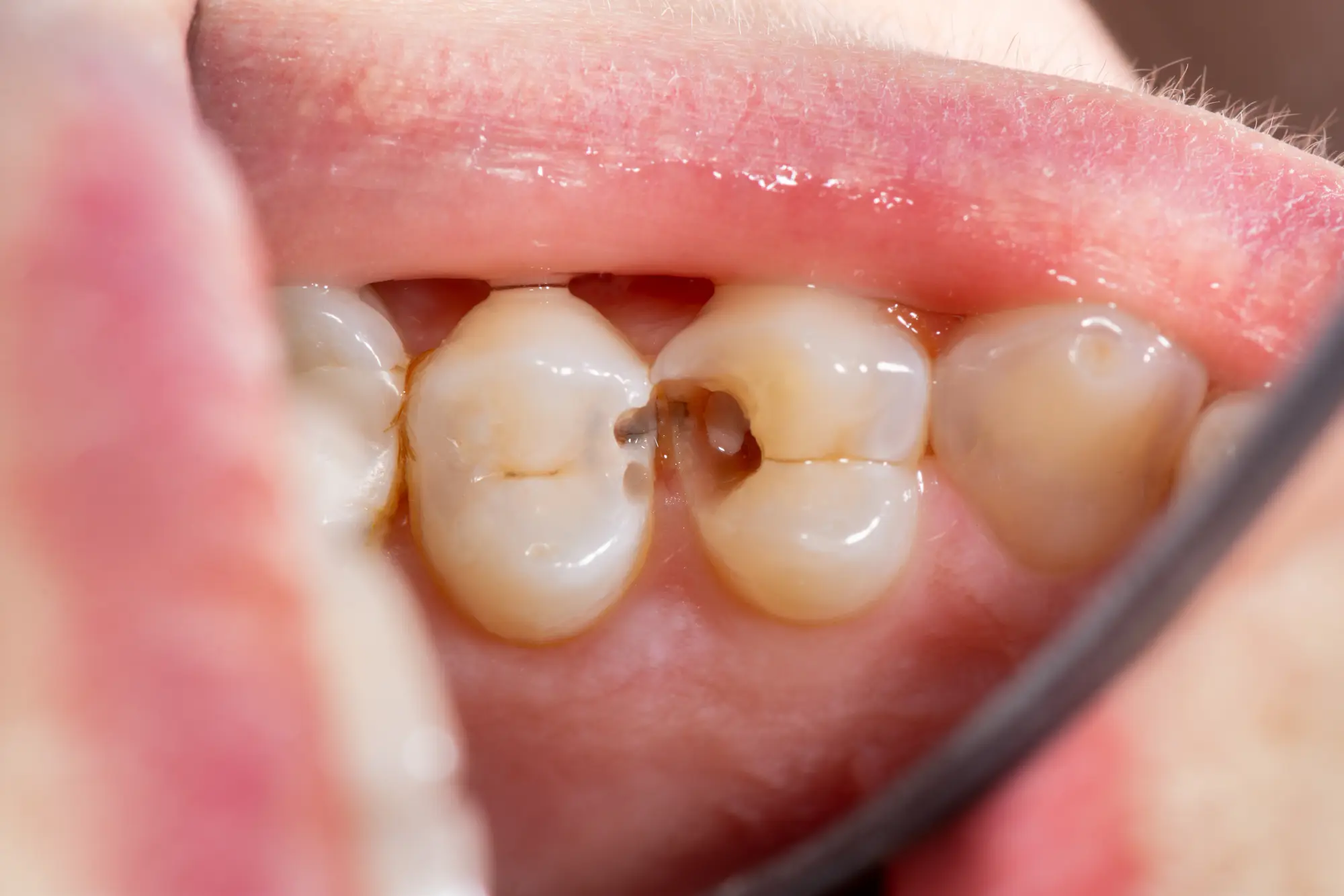
Those tight spaces are exactly where plaque likes to hide. Plaque is the sticky film of bacteria that feeds on leftover food and produces acid, and when it sits undisturbed between teeth, it can wear through the enamel and cause a cavity. Because that area is hard to see, a cavity there can grow quietly for a while before anyone notices.
That's why we recommend flossing, especially for children whose teeth are already touching side by side. Many kids start to have tight contacts between their teeth earlier than parents expect, so it's worth asking us at your child's next visit whether it's time to add floss to the routine.
A few tips can make flossing easier at home:
- Try kid-friendly floss picks, which are often easier for small hands (and for parents helping out).
- Make it part of the same routine every night, right after brushing, so it becomes automatic.
- Let your child pick out their own floss picks so they feel invested.
- Be patient. Flossing takes practice, and a little help from a parent goes a long way at first.
Do Cavities Run in the Family? The Role of Genetics and Habits
Parents often ask us whether there's a genetic component to cavities. The honest answer is yes, there can be. Some kids are simply more prone to tooth decay than others, even when their habits look just like their siblings' or classmates'.
Two factors that play a role are worth knowing about. The first is the strength of your child's enamel. Enamel is the hard outer layer of the tooth, and it's naturally stronger in some children than in others. Kids with weaker enamel can be more vulnerable to acid attacks from plaque and food.
The second is the strength of the plaque itself. Not everyone's mouth hosts the same bacteria, and some plaque is more aggressive than others at producing the acid that breaks down teeth. This is part of why one child can have very few cavities while a brother or sister, eating the same foods and brushing the same way, keeps running into problems.
The third piece of the puzzle is one that parents can influence directly: how often and how well your child cleans their teeth. We can't change the genes your child was born with, but daily hygiene habits make a real difference in managing risk. So if cavities run in your family, please don't feel discouraged. It simply means your child may benefit from a little extra attention and a more tailored prevention plan, which we'll talk about below.
Snacks and Drinks That Contribute to Childhood Cavities
"What can my child eat and drink without getting cavities?" is another question we hear a lot. Food and drink play a major role in tooth decay, and the two biggest offenders are carbohydrates and acidity.
Carbohydrates, especially the starchy, easy-to-chew kind, break down into sugars that bacteria love to feed on. Acidic foods and beverages, on the other hand, soften the enamel directly. When both are present, the mouth becomes the perfect environment for plaque to do its damage and for cavities to form.
Some snacks and drinks that parents may not realize are cavity risks include:
- Chips and crackers. Starchy snacks like potato chips and goldfish crackers break down into sugars and tend to get stuck in the grooves and between teeth.
- Soda. It's both sugary and acidic, which makes it a double hit for the enamel.
- Lemonade. It may feel like a healthier choice, but the acid and sugar combination is hard on little teeth.
- Juice. Even when it's labeled as natural, juice is acidic and full of sugar, and sipping it throughout the day keeps teeth bathed in it.
We're not asking parents to ban every treat, because that's not realistic and it's no fun for anyone. Instead, we encourage you to minimize these snacks and drinks where you can. A few practical ideas: save sweet or starchy snacks for mealtimes rather than all-day grazing, offer water as the go-to drink between meals, and rinse with water after a snack if brushing isn't possible. Cheese, fresh fruits and vegetables, and plain water are friendlier options for your child's teeth.
Brushing the Right Way: Technique, Time, and Parent Help
Even though brushing only reaches three of the five tooth surfaces, it remains the foundation of good oral care. The goal is to brush two times a day for two minutes each time. Two minutes can feel like a long time to a child, so a song, a sand timer, or a brushing app can help the time pass.
Technique matters just as much as time. We recommend small, gentle circular motions, which remove plaque effectively without irritating the gum tissue. Scrubbing hard back and forth can be rough on the gums and doesn't clean any better.
Here's something that surprises many parents: most children don't yet have the dexterity or skill to brush effectively on their own. Holding a toothbrush and moving it carefully around every surface of every tooth is a complex task for small hands. That's why we recommend that parents help with brushing, or at least follow up, until a child is around six to eight years old.
If your child insists on doing it themselves (and many do!), try this approach: let them go first, then take a turn to make sure the back teeth and the gumline are clean. It gives your child some independence while making sure nothing gets missed. As they grow and their coordination improves, you can gradually step back.
Extra Protection for Kids at High Risk for Cavities
For some children, a standard routine isn't quite enough, and that's okay. If we see that your child is at higher risk for cavities, we have a few strategies that can help.
One is adjusting the toothpaste. For high-risk kids, we may recommend a toothpaste with extra vitamins and minerals. These formulas can help reduce the amount of plaque in the mouth and strengthen the enamel, giving teeth a better chance of resisting decay. We'll talk with you about which option makes sense for your child's age and needs.
Another is a more frequent hygiene schedule. Seeing your child more often gives us the chance to keep a close eye on their teeth, clean areas that are hard to reach at home, and spot any changes before they turn into bigger problems. Think of it as a team effort: you handle the daily care at home, and we provide regular monitoring and professional support.
Being labeled "high risk" isn't a reflection of your parenting. Many of the factors, like enamel strength and the type of bacteria in the mouth, are outside anyone's control. What matters is that we recognize the risk early and respond with a plan that fits your child.
Finding New Cavities at Every Visit? Here's What We Recommend
Some parents come in and tell us, "Every time we visit, we find a new cavity. What's going on, and how can we stop it?" If that sounds like your family, you're not alone, and there's a path forward.
Our recommendation is to increase the frequency of recare visits. Instead of seeing us twice a year, we may suggest coming in three times a year. Those extra visits mean we catch changes sooner and can reinforce good habits with you and your child more often.
We also recommend monitoring with X-rays at least every six months. X-rays allow us to see what the naked eye can't, including early decay between teeth where flossing and brushing can't always reach. Catching a cavity at its earliest stage makes a big difference, because a small spot is much easier to address than a large one.
That's really the heart of our approach. Our goal is to find problems while they're still small so we can talk about preventive measures and treat them early, before they grow large enough to need more involved care like fillings or crowns. Early detection means less treatment, less time in the dental chair, and a much more comfortable experience for your child.
Keep Your Child's Smile Cavity-Free in Sun City
Cavities in children can feel confusing, especially when your child is brushing every day. But as we've covered, brushing is only part of the picture. Flossing cleans the two tooth surfaces a toothbrush can't reach. Smart snack and drink choices cut down on the sugar and acid that fuel decay. Parent-assisted brushing with small circular motions and two full minutes, twice a day, makes a big difference. And for kids who are at higher risk, specialized toothpaste, more frequent visits, and regular X-rays can help us stay one step ahead.
At Little Sprouts Pediatric Dentistry in Sun City, TX, Dr. Jonathan McNair and our team are here to help your family build a prevention plan that works. Whether your child has never had a cavity or seems to get a new one at every checkup, we'd love to partner with you to protect their smile.
If you have questions or you're ready to schedule a visit, please give us a call at (228) 219-9601. We can't wait to meet you and your little sprout!
Related Posts
Why Does My Child Keep Getting Cavities?

Tooth Extraction for Kids: What Parents in Leander Should Know

The Importance of Preventive Dental Care for Children in Leander
