
Pediatric Dental Sedation in Sun City, TX: A Parent's Guide to Keeping Kids Calm and Comfortable
If the thought of your child's next dental visit makes your stomach flip a little, you're not alone. Many children feel nervous about the dentist, and parents often carry that worry right alongside them. Maybe your little one has had a tough visit before. Maybe they need more treatment than usual. Or maybe you simply know your child, and you know the dental chair is going to be a challenge.
At Little Sprouts Pediatric Dentistry in Sun City, TX, we see this every day, and we want you to know there are gentle, safe ways to help. Dr. Jonathan McNair and our team offer several pediatric dental sedation options, and we choose the right one for each child based on their needs, their comfort level and your input as a parent.
In this guide, we'll explain each type of sedation we use, how we decide which one fits your child, and the safety steps we follow before, during and after every procedure. Our goal is simple: we want your child to get the care they need while feeling as relaxed and comfortable as possible.
Why We Offer Pediatric Dental Sedation
Every child is different. Some kids hop into the chair ready to count their teeth with us. Others feel anxious the moment they walk through the door. On top of that, each child has a different amount of dental work that needs to be done. One child may need a single small filling, while another may need several procedures.
Because of this, there is no one-size-fits-all approach. Pediatric dental sedation lets us meet each child where they are. It helps us:
- Ease fear and anxiety so your child feels calmer
- Keep your child comfortable during treatment
- Complete care safely and efficiently
- Prevent a stressful experience that could make future visits harder
We believe a positive dental experience in childhood can shape how your child feels about oral health for the rest of their life. Sedation, when used thoughtfully, is one of the tools that helps us build that positive foundation.
Nitrous Oxide ("Happy Gas"): Gentle Help for Most Kids
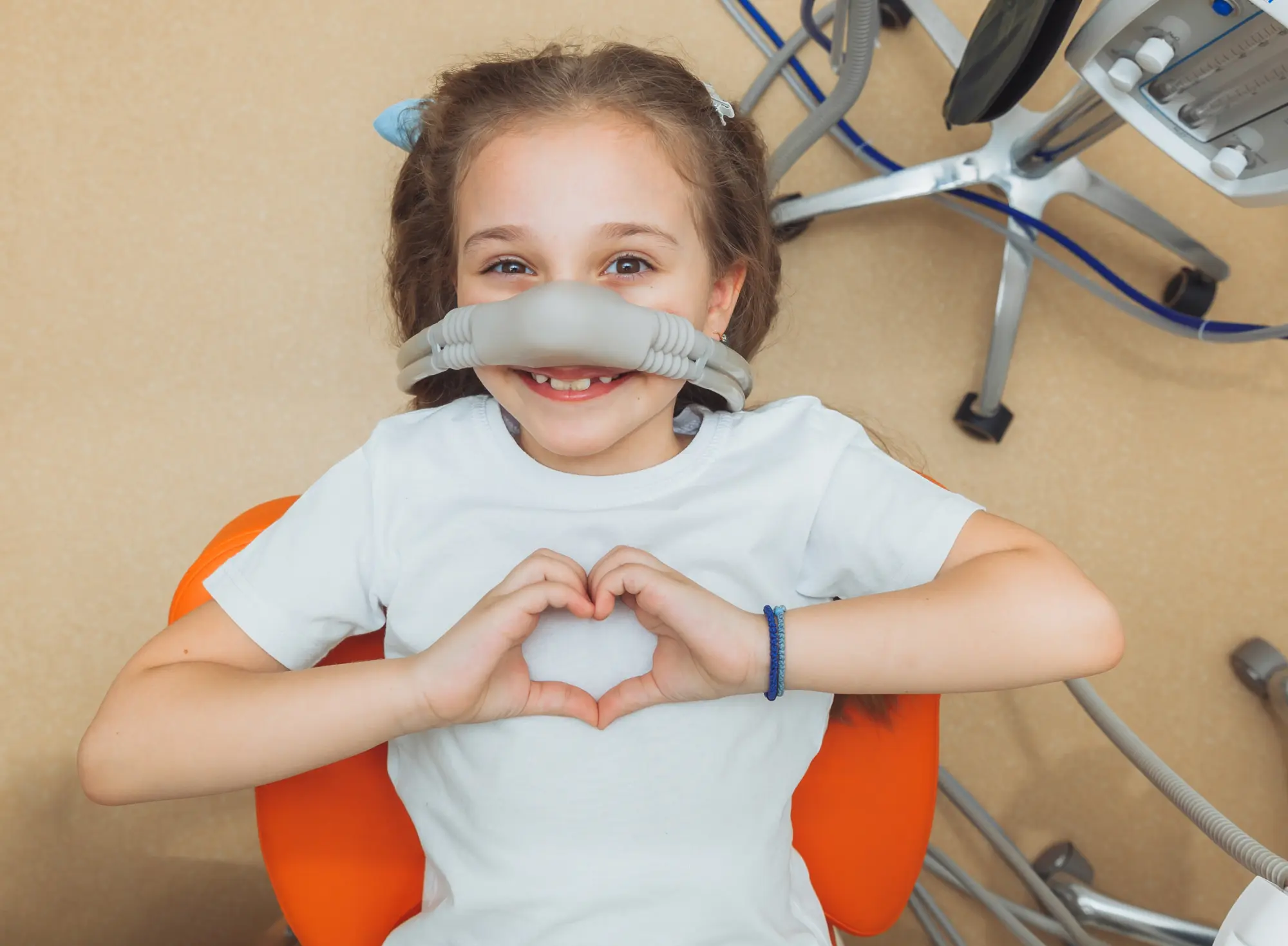
The first option we usually consider is nitrous oxide, which many families know as laughing gas. We like to call it "happy gas." It's a mild, inhaled sedative that your child breathes through a small, comfortable mask over the nose.
One of the best things about nitrous oxide is how quickly it works. It takes effect in about a minute, and it stays on only while your child is having their dental procedure. When we're finished, we give your child 100% oxygen to flush the happy gas out of their system, so they can get back to their day.
Happy gas offers several benefits for kids:
- It reduces anxiety. Your child feels more relaxed and less worried about what's happening.
- It helps with discomfort. Nitrous oxide can manage some degree of pain, which adds to your child's comfort.
- It provides distraction. Many children feel a pleasant, floaty sensation that takes their focus off the procedure.
- It creates a better overall experience. In most cases, kids leave feeling proud of how well they did.
In fact, we use nitrous oxide for roughly 75 to 80% of the children who need a little extra support. It's ideal for kids who are excited to be big helpers and want to get their treatment done, but who just need a small push to get past their nerves.
Oral Conscious Sedation: The Next Step for Anxious Kids
Sometimes happy gas isn't quite enough. Some children truly want to cooperate, but their fear is simply too big to manage with nitrous oxide alone. For these kids, oral conscious sedation is often the next step.
With oral conscious sedation, your child is given a medication to drink. Parents sometimes call it "the juice" or "the cocktail." Depending on your child's needs, we may use a medication such as Versed, Valium or hydroxyzine, which is similar to Benadryl. These medications help your child feel more relaxed and less anxious, so they can stay comfortable during treatment.
Oral conscious sedation tends to work especially well for:
- Children with limited treatment needs. If your child needs only a small amount of work but feels too scared to try, oral sedation can give them the extra help they need.
- Children whose airways support this type of sedation. Before recommending it, we carefully evaluate your child to make sure oral conscious sedation is a safe and appropriate fit.
For kids who are good candidates, we often recommend giving oral sedation a try because it's usually very effective. It allows your child to stay calm while we complete their treatment, without the need to go fully to sleep.
General Anesthesia: Complete Care in a Single Visit
For some children, the most effective and compassionate option is general anesthesia. With general anesthesia, your child is fully asleep, so we can complete all of their dental work in a single visit without them feeling stressed or traumatized.
Most procedures under general anesthesia take about an hour to an hour and a half. One of the biggest advantages is that everything gets done at once. Once your child's treatment is complete, their future visits are typically just routine maintenance visits like cleanings and checkups. For many families, that's a huge relief.
General anesthesia may be the right choice for:
- Very young children with significant treatment needs. Sometimes children as young as two or three need a lot of dental work. In these cases, putting them to sleep allows us to complete their care safely and thoroughly.
- Older children with severe anxiety. Some kids, even those up to age 12 or older, have anxiety so high that they simply can't tolerate sitting in a dental chair for a procedure. General anesthesia lets them receive the care they need without the distress.
We understand that general anesthesia can sound intimidating. That's why we take time to walk you through every detail, answer your questions and make sure you feel confident and prepared.
How We Choose the Right Sedation for Your Child
You might assume age is the biggest factor in choosing a sedation method, but that's not usually the case. When Dr. McNair recommends an option, the two most important things we look at are:
- Your child's anxiety level. How nervous or fearful is your child about dental care?
- The amount of treatment needed. Is it a single small procedure, or several more involved ones?
These two factors together help guide us toward the approach that will be safest, most comfortable and most effective for your child.
We also believe that you, as the parent, are one of the most important voices in this decision. You spend far more time with your child than we do, and you know them best. So we ask you questions like:
- Do you think your child feels anxious about dental visits?
- Do you think your child could tolerate the treatment they need?
- How have they handled past medical or dental appointments?
If you believe your child can handle treatment with a little support, we'll offer options that match their level of need, such as nitrous oxide. If you feel your child will struggle, we may recommend oral conscious sedation or general anesthesia.
Whatever we recommend, we always give you a full, detailed explanation of what each option involves. We want you to understand exactly what to expect, how to prepare and what's needed for a successful outcome. You'll never be left guessing.
Safety First: What Happens Before, During and After Sedation
Your child's safety is our top priority, and it guides every step of the sedation process. Here's what you can expect at Little Sprouts.
Before Sedation
Before any sedation procedure, we check your child's weight, height and vital signs. This helps us confirm that the procedure is safe to complete that day and that we choose the right medication amounts for your child.
We'll also confirm that your child has followed their fasting instructions, which means no food or drink for eight hours before their appointment. Following these instructions is very important for your child's safety, so we'll make sure you have clear guidance well ahead of time.
During Sedation
Throughout the procedure, we closely monitor your child's vital signs, including their blood pressure and pulse. Our team keeps a constant eye on how your child is doing from start to finish.
Most importantly, Dr. McNair serves as the number one monitor, personally evaluating your child throughout the entire procedure. Monitoring equipment is helpful, but there's no substitute for an experienced pediatric dentist paying careful attention to your child the whole time.
After Sedation
Once treatment is complete, we check your child's vital signs again. We make sure everything has returned to baseline before your child goes home. We won't send your little one out the door until we're confident they're ready.
Helping Your Little Sprout Have a Positive Dental Experience
Dental anxiety is real, and it's nothing to be embarrassed about, for kids or for parents. The good news is that with the right support, even the most nervous child can get the care they need and leave feeling proud of themselves.
Whether your child needs a little happy gas to take the edge off, a calming drink to help them relax or the peace of mind of completing all their treatment in a single visit, Dr. Jonathan McNair and our team at Little Sprouts Pediatric Dentistry are here to help. We'll listen to your concerns, explain every option clearly and partner with you to choose the approach that's best for your child.
If you're a parent in Sun City, TX, or the surrounding area and you'd like to learn more about pediatric dental sedation, we'd love to hear from you. Call Little Sprouts Pediatric Dentistry at (228) 219-9601 to schedule a visit or ask any questions. Together, we can help your little sprout grow a healthy, happy smile.
Related Posts
Pediatric Dental Sedation in Sun City, TX: A Parent's Guide to Keeping Kids Calm and Comfortable
Why Does My Child Keep Getting Cavities?

Tooth Extraction for Kids: What Parents in Leander Should Know
